

Rolfing for knee, hip and ankle pain
I look at your knee, hip and ankle together, as one chain.
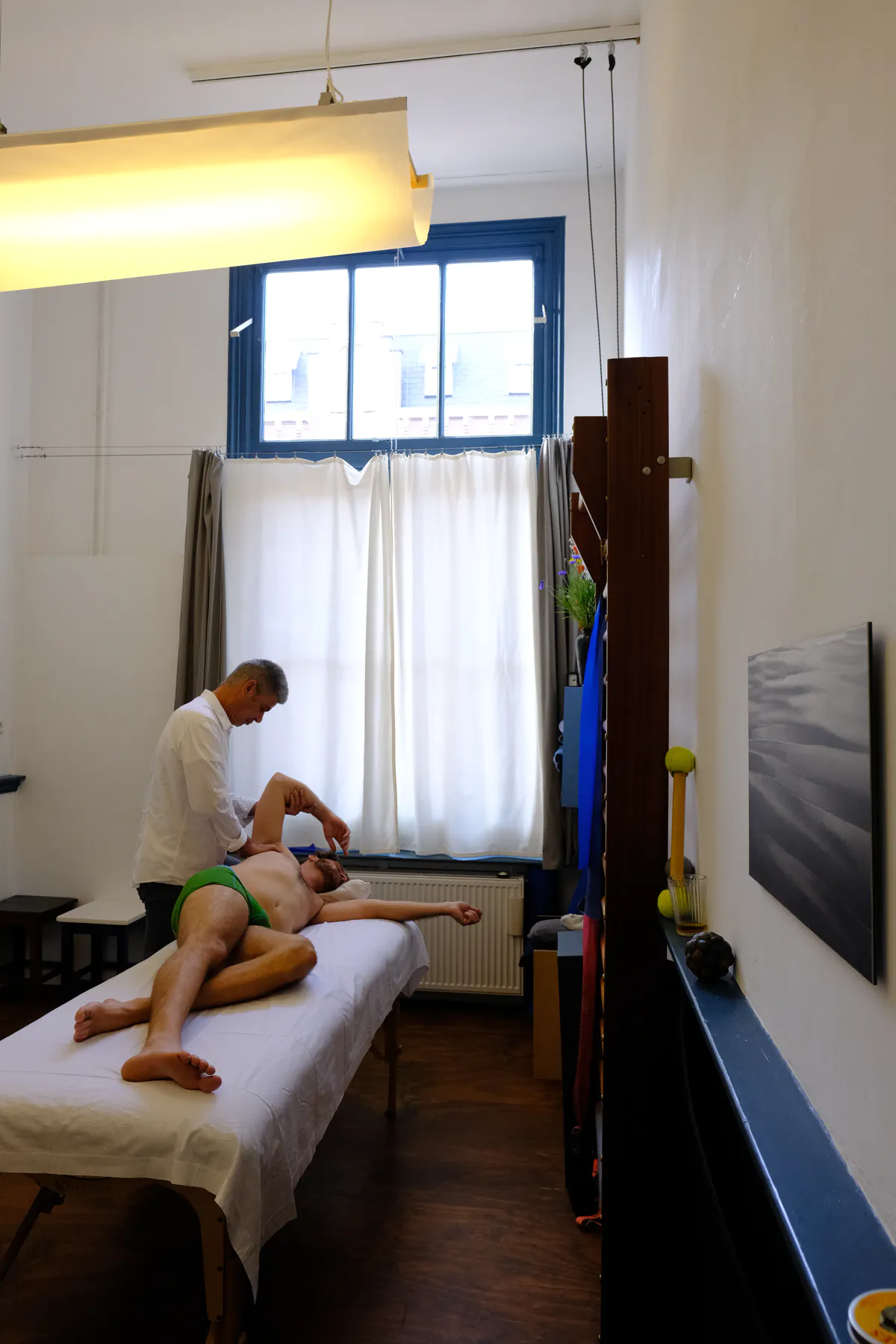
Rolfing is a hands-on method that works with your fascia, and with knee, hip or ankle pain I look at how your feet, legs and pelvis share the load, not only at the joint that hurts. It is complementary care alongside your doctor or physiotherapist, not a replacement for them.
Does this sound familiar?
- Knee pain on the stairs or after a run
- A hip that feels stiff in the morning or after sitting for a long time
- An ankle that has stayed stiff, or keeps giving way, since an old sprain
- Pain that moves from one joint to another
- Complaints that keep coming back, even with exercises
- One leg that feels different from the other
Why look further than the knee?
Your knee sits between your hip and your ankle, and the fascia runs through all three. That is why, with knee pain, I also look at how your feet and hip move, and at how you stand and walk. The same goes for hip pain, or an ankle that has been stiff for years.
I look at your whole leg, and where we start is a choice we make together.
Do you run or play sport?
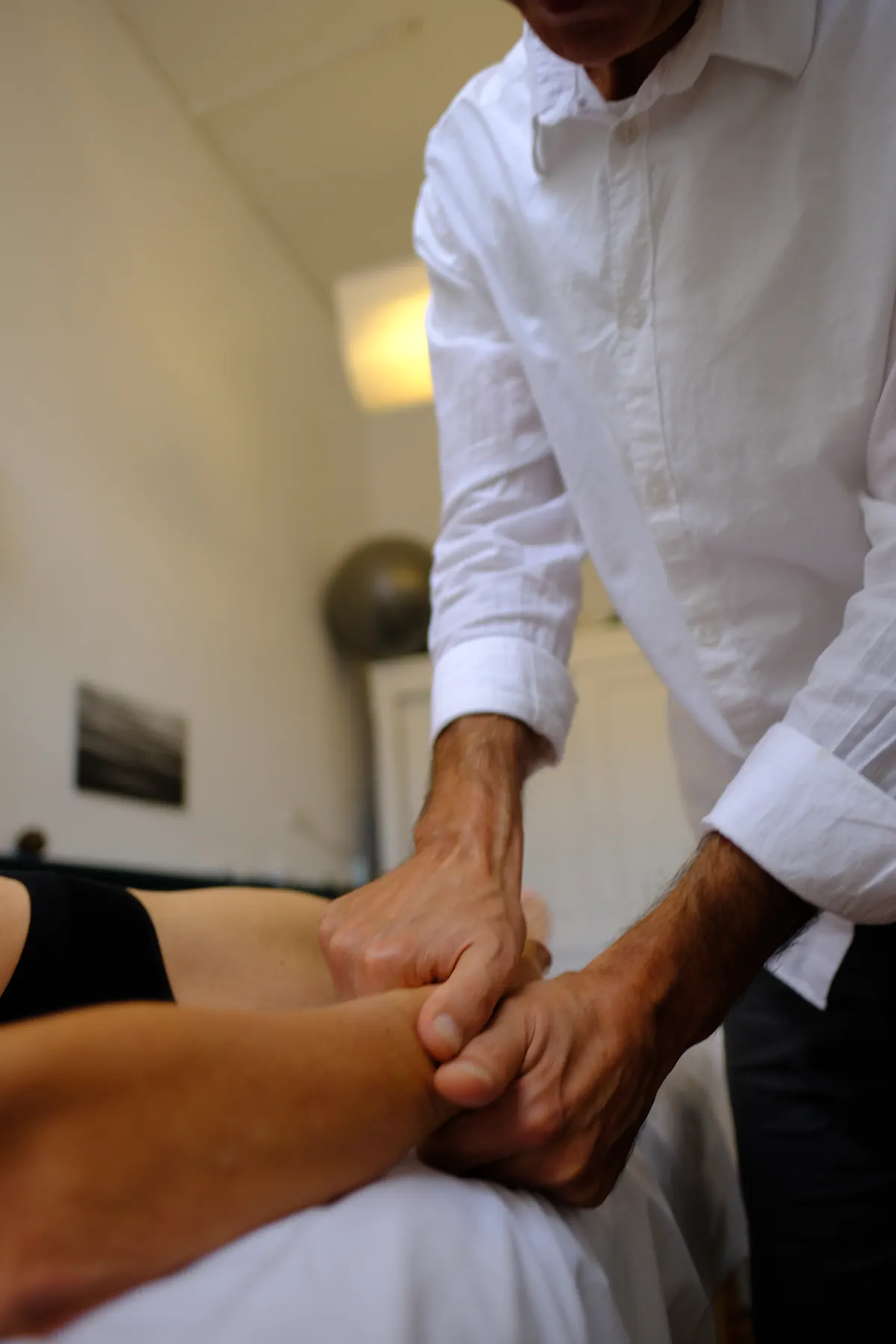
Many people come to me with knee pain or hip pain after running, or after years of tennis or hiking. Your training load is something to plan with your trainer or sports physiotherapist. In a session I look at how your body moves under that load, from your stride to your feet. I jog and play tennis myself, so I know how it feels when a joint stops you doing what you enjoy.


What if the pain has been there for a long time?
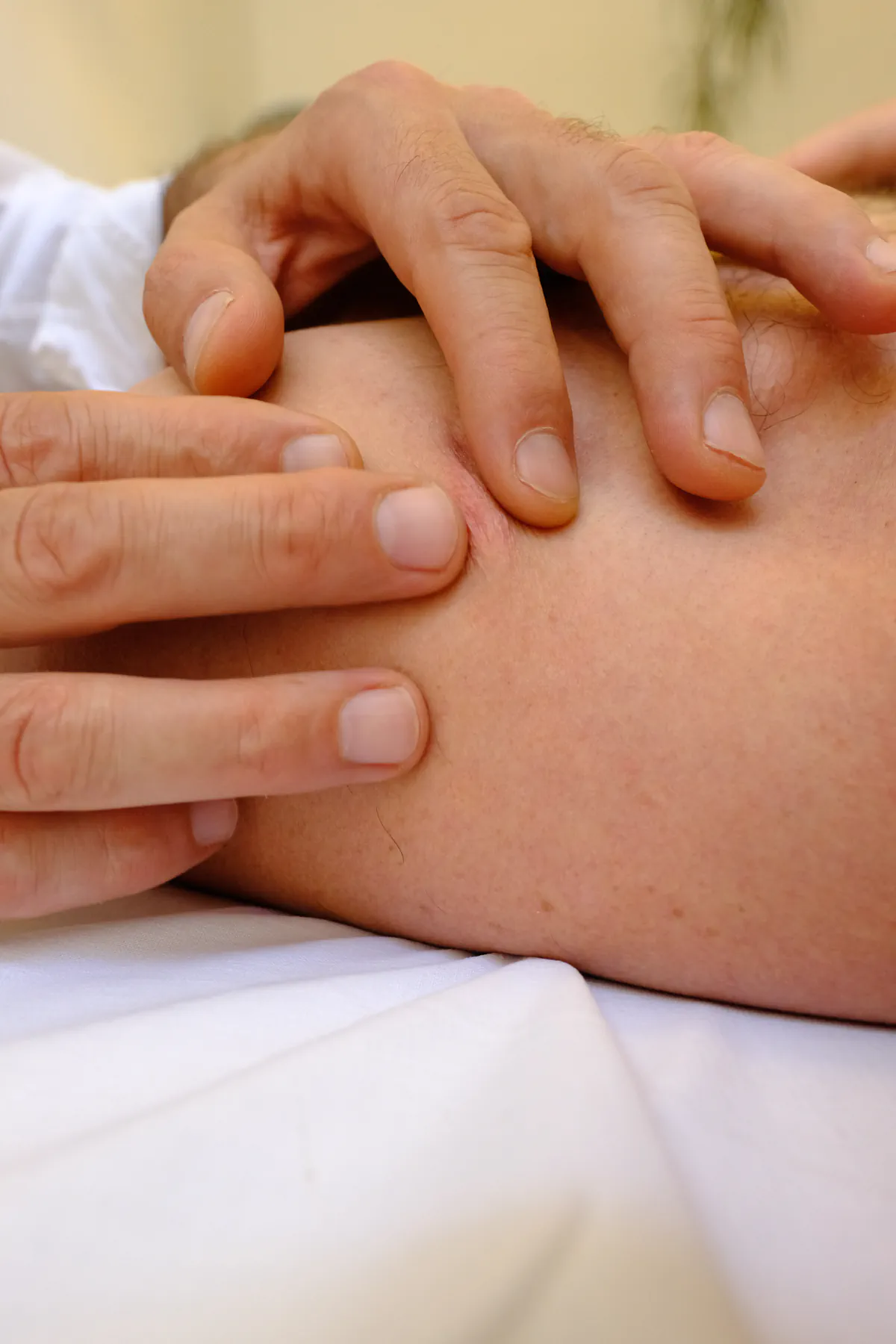
Some people come after months or years of joint pain, when rest, exercises or other care have not settled it. When pain has lasted a long time, I look at your whole body, not only the sore spot. Long-lasting pain is one of the subjects I keep studying. You can see the courses in my education history. I cannot promise the pain will go. What we do is look together at how your body moves and carries load now, and what can change in that.
When should you see your doctor first?
With a fresh injury, a joint that is swollen, red or warm, a knee that locks, or a leg you cannot put weight on, see your GP first. The same applies if you have, or suspect, an illness. Rolfing can come later, alongside that care.
What a session looks like
Professional and personalised treatment
Years of experience and expertise
Individually tailored sessions


“It is incredible what the Rolfing treatment by Janco means for my body and mind. It is as if my body is taken out of its wrinkles, and I also stand differently on my legs. It is reconnecting and I would like to grant this valuable experience to everyone.”
L.


About Janco


"I think there are many lenses through which you can look at a person, or at a body; for example holistic, integrative, structural and functional; or the liquid body and the biomechanical body. This complexity makes it a bit more difficult to understand things, but also more interesting, and to me it is actually the only way that makes sense.
Structural Integration work is physical, but can also be psychological (history in the tissue, feeling in the past, becoming aware of emotional tension, stiffness and stress, and holding of breath).
Rolfing should feel good, relaxing, and releasing, and also have a wellness effect, next to reducing pain, and creating efficiency in a more integrated body.
The work should never feel painful, but sometimes can be on an edge."
Pricing
Adult
Child (under 16 years)


Can I come to you with knee pain?
Many people come to me with knee pain. I cannot promise it goes away, and Rolfing does not replace your doctor or physiotherapist. What a session does is look at how your knee works together with your hip, ankle and feet, and work hands-on with the fascia around them.
Do you only work on the joint that hurts?
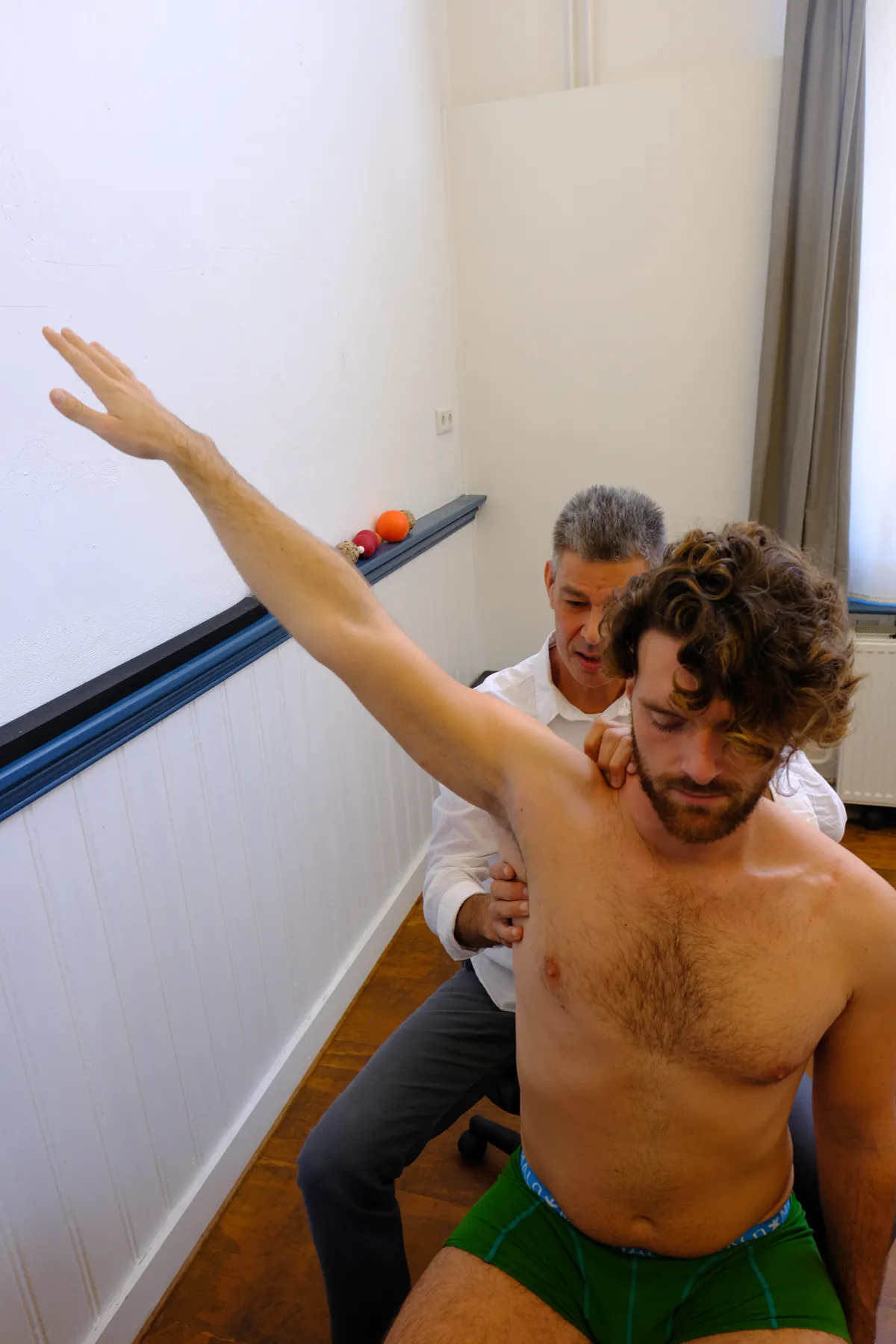
No. I look at your whole leg, and often further, and we decide together where to start. The body reading happens in underwear, so I can see how your leg moves.
Can I keep running between sessions?
That depends on what you do and how you feel. Tell me what you do and how often, so we can plan around it. If your doctor or physiotherapist has advised rest, follow that.
Do I need a referral from my GP?
No, you can book a session directly. If you have supplementary insurance, in most cases part of the cost can be reimbursed; check your own policy. If you have, or suspect, an illness, please see your doctor first.

Discover the gentle power of Rolfing
Book a session and find out how Rolfing works with your posture, movement and well-being.
Rolfing is complementary care, not medical treatment. If you have, or suspect, an illness, please see your doctor first.

