

Rolfing, burnout and stress
I look at how stress shows in your body: how you breathe, hold yourself and move.
Rolfing is a hands-on method that works with your fascia, and with burnout or long-term stress I look at how that load shows in your body: how you breathe, hold yourself and move. It is complementary care alongside your doctor, psychologist or coach, not a replacement for them.

Does this sound familiar?
- A body that feels tense, tight or tired even after a night's rest
- Shallow breathing, or a tight chest
- Shoulders, neck or jaw that stay clenched
- Little energy for exercise or for things you used to enjoy
- Pain or stiffness that came with a stressful period
- Not noticing what your body needs until it makes you stop
How does stress show in the body?
Stress is not only in your head. Many people notice it in how they breathe, in shoulders and jaw that hold tension, and in a body that feels tired all the time. In a session I look at how you stand, breathe and move, and we work hands-on at your pace.
How the body and nervous system respond to long-term stress, including polyvagal theory, is one of the subjects I keep studying. You can see the courses in my education history.
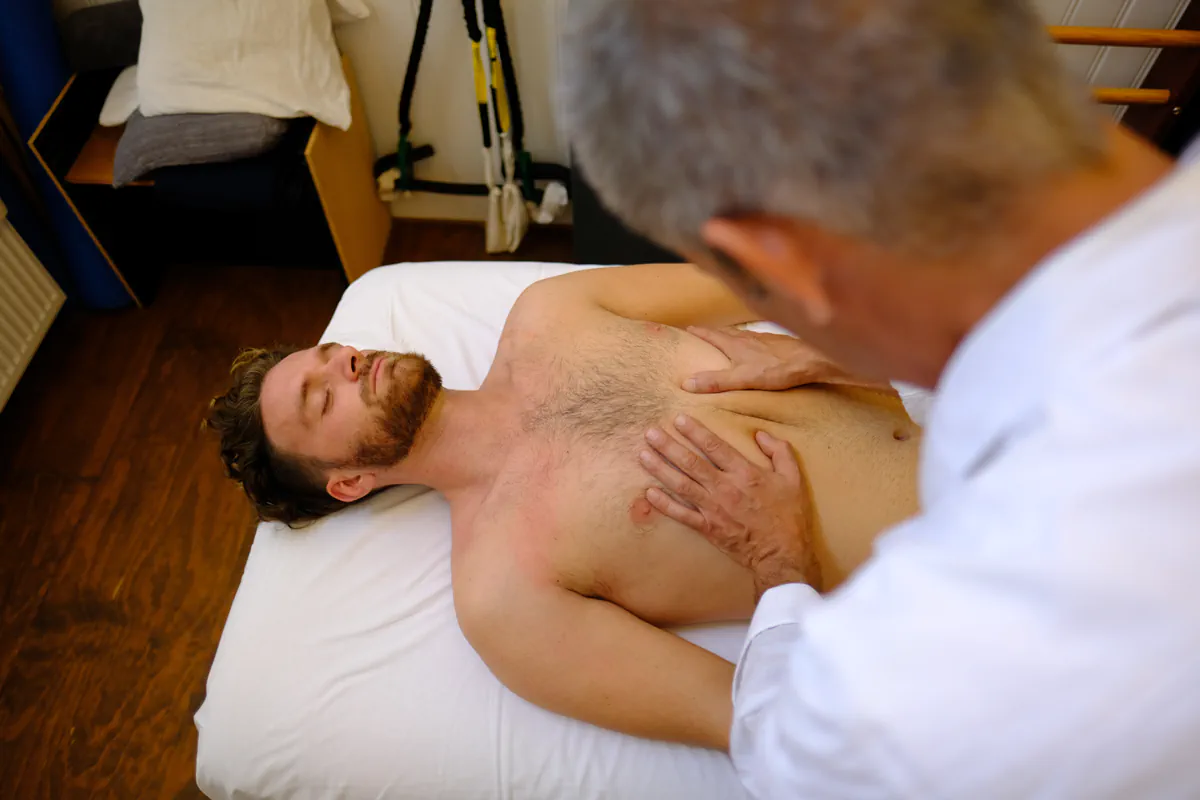
Are you working on burnout recovery?
Some people come to me while they are on sick leave, others when they are back at work and their body still feels strained. Your burnout recovery is guided by your doctor, psychologist or coach, and that stays so. In a session I look at what your body is doing, and we decide together how much is useful for you. Some weeks that is a lot, some weeks very little, and both are fine.

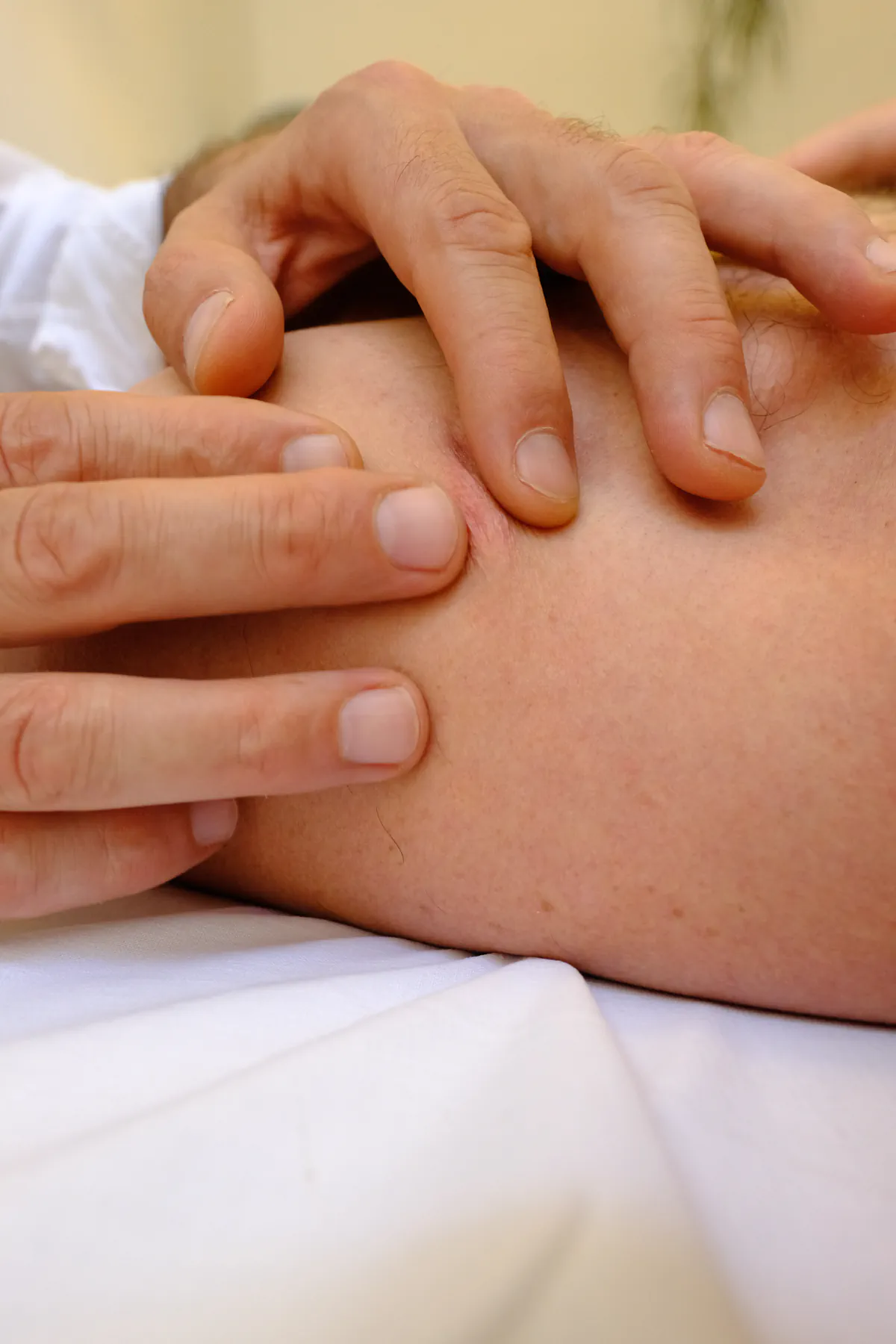

What if you are very tired?
Then we keep it simple. A session lasts 60 minutes, the touch can be very light, and you can ask me to slow down or stop at any moment. People feel different things afterwards, and I cannot promise a result. What I can do is look with you at how your body carries load, at a pace that suits you.
When should you see your doctor first?
With burnout complaints, your GP or psychologist comes first. If you have thoughts of harming yourself, call 113 or 0800-0113, the Dutch suicide prevention line. The same applies if you have, or suspect, an illness. Rolfing can come later, alongside that care.
What a session looks like
Professional and personalised treatment
Years of experience and expertise
Individually tailored sessions


“It is incredible what the Rolfing treatment by Janco means for my body and mind. It is as if my body is taken out of its wrinkles, and I also stand differently on my legs. It is reconnecting and I would like to grant this valuable experience to everyone.”
L.


About Janco


"I think there are many lenses through which you can look at a person, or at a body; for example holistic, integrative, structural and functional; or the liquid body and the biomechanical body. This complexity makes it a bit more difficult to understand things, but also more interesting, and to me it is actually the only way that makes sense.
Structural Integration work is physical, but can also be psychological (history in the tissue, feeling in the past, becoming aware of emotional tension, stiffness and stress, and holding of breath).
Rolfing should feel good, relaxing, and releasing, and also have a wellness effect, next to reducing pain, and creating efficiency in a more integrated body.
The work should never feel painful, but sometimes can be on an edge."
Pricing
Adult
Child (under 16 years)


Can I come to you during burnout recovery?
Some people do. I cannot promise recovery, and Rolfing does not replace your GP, psychologist or coach. What a session does is look at how stress shows in your body, and work hands-on with the fascia at a pace that suits you.
Do I have to talk about my stress?
No. Each session starts with a short conversation, and you tell me as much or as little as you want. I work with the body, not with your story.
Do I need to be fit to come?
No. A session takes place on a treatment table, the touch can be very light, and you decide the pace. People of all ages come, from 5 months to 86.
Should I tell my GP or psychologist that I come to you?
It is a good idea, because Rolfing sits alongside their care. If they have given you advice about rest or activity, follow that, and tell me what it is.
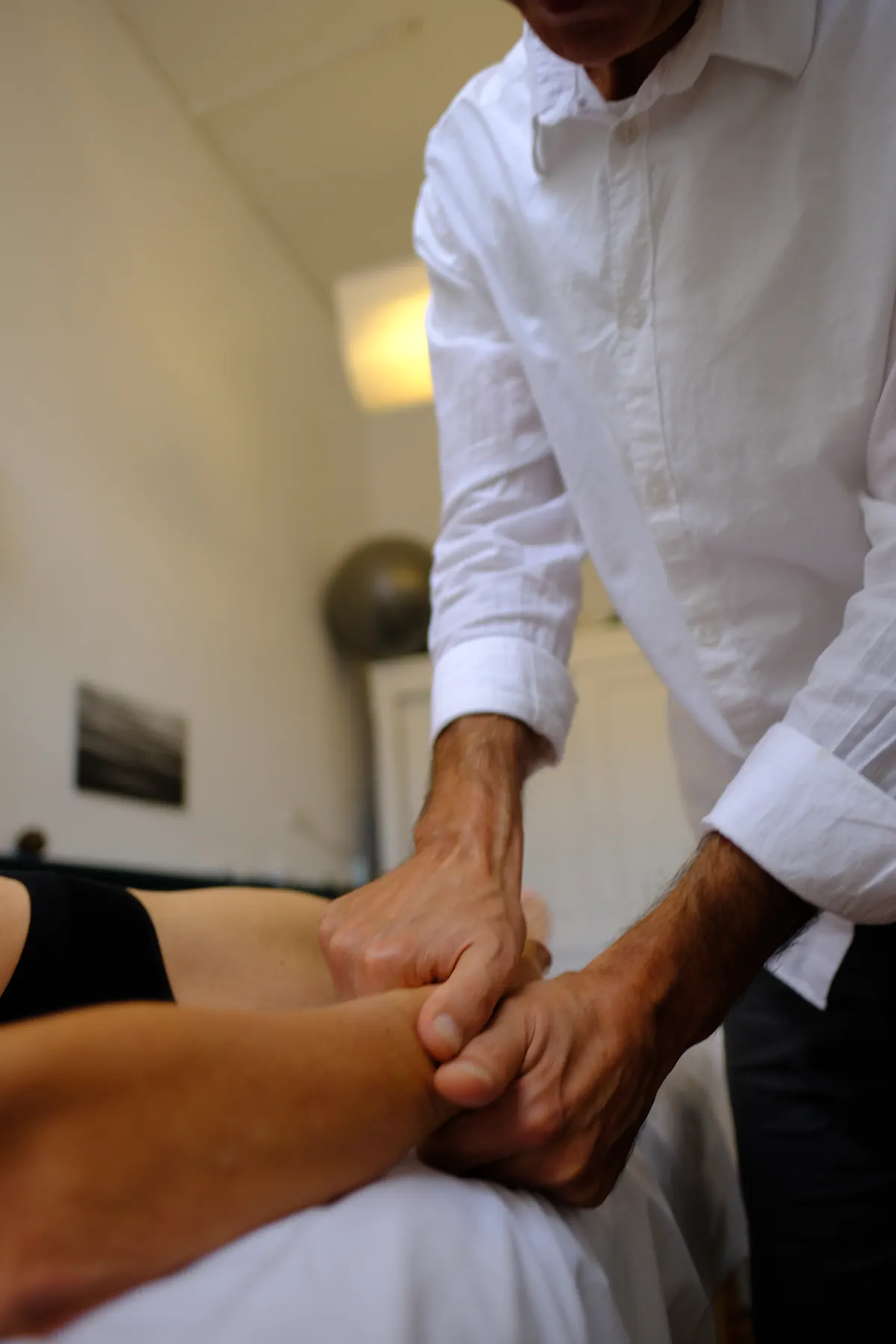
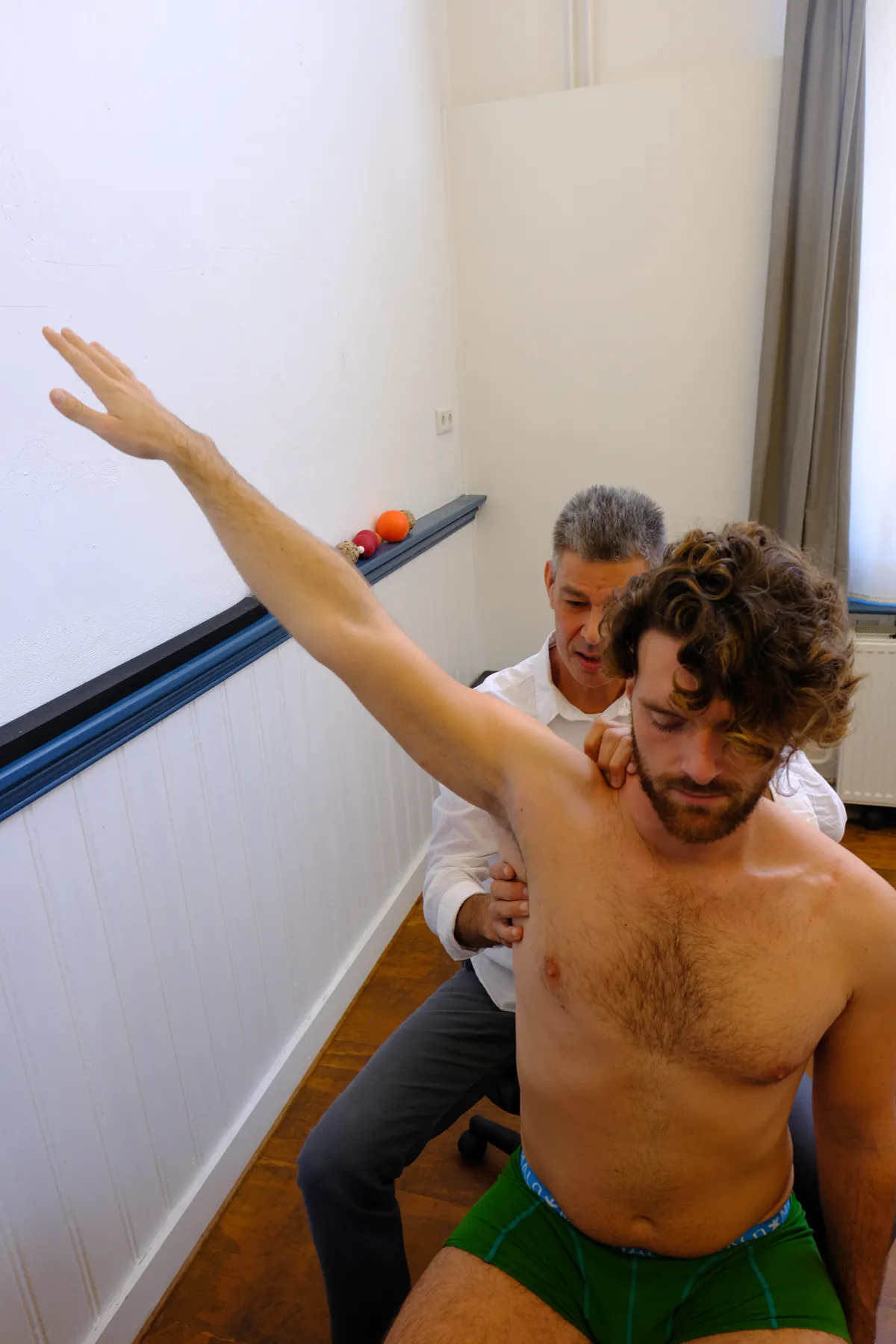
Discover the gentle power of Rolfing
Book a session and find out how Rolfing works with your posture, movement and well-being.
Rolfing is complementary care, not medical treatment. If you have, or suspect, an illness, please see your doctor first.

